

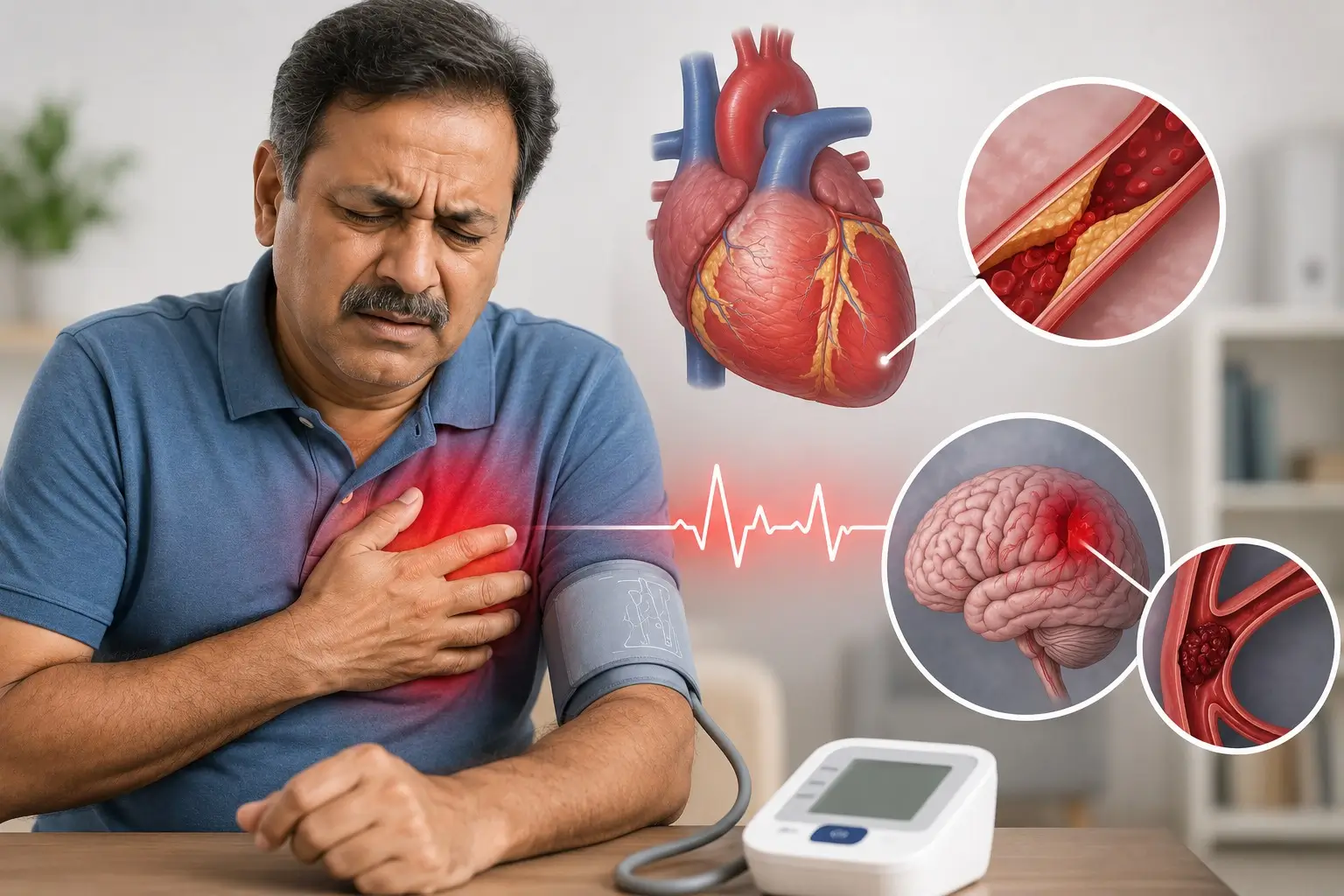
In many respects, high blood pressure earns its sinister nickname since it usually doesn’t hurt. Most people don’t experience any troublesome symptoms when their blood vessels are subjected to prolonged damage. Such delayed damage then manifests itself in fatal consequences.
Heart attacks and strokes are the two most common resulting issues people face due to poor hypertension control in the long term. The ability to establish a direct biological link among high blood pressure, heart attacks, and strokes is one of the most valuable forms of cardiovascular knowledge to possess.
Key Takeaways
| Elevated blood pressure damages arterial walls over time, accelerating the process of atherosclerosis that underlies both heart attacks and most strokes.The higher the blood pressure and the longer it remains uncontrolled, the greater the structural damage to the heart, brain, and kidneys. Recognising warning signs of cardiac and cerebrovascular events enables a faster response, which directly influences survival and recovery outcomes.Effective medication combined with lifestyle changes reduces cardiovascular event risk substantially, even in patients with longstanding hypertension. |
What High Blood Pressure Does to Blood Vessels Over Time
Blood pressure is the pressure exerted by blood on the walls of the arteries when the heart pumps. The arterial wall is elastic. Hence, it is designed to take this pressure. However, if blood pressure remains high for a long time, the arterial walls are repeatedly damaged.
This damage will trigger the inflammatory defence and allow lipids from the blood to penetrate the arterial walls, thus producing fat deposits known as plaques. Eventually, these plaques grow larger and harder over time and usually block the arteries as the process called atherosclerosis develops.
The arteries of the heart and brain are most susceptible to this process. If blood supply through these arteries is seriously compromised, it could cause problems like a heart attack or a stroke.
How Hypertension Leads to Heart Attack
The coronary arteries that supply the heart muscle with oxygenated blood run along the surface of the heart. Hypertension accelerates plaque formation within these vessels. As plaques grow, the blood supply to the heart muscle is increasingly compromised.
When a plaque ruptures, the body’s clotting response forms a blood clot at the rupture site that can completely block the coronary artery, cutting off oxygen supply to the segment of heart muscle it supplies.
Recognising the Signs of Heart Attack allows for faster emergency response, which is the single most important factor in reducing the extent of permanent heart muscle damage. Symptoms include:
- Central chest pain is described as pressure, tightness, or crushing, and may radiate to the left arm, jaw, neck, or back.
- Sudden breathlessness at rest or with minimal activity.
- Profuse sweating without exertion.
- Nausea or light-headedness alongside chest discomfort.
- In women, atypical presentations include fatigue, upper back pain, or jaw discomfort without prominent chest pain.
Any of these symptoms, particularly in combination and particularly in a person with known high blood pressure, should be treated as a potential cardiac emergency requiring immediate medical attention.
How Hypertension Leads to Stroke
The report titled Understanding Stroke Causes explains that high blood pressure represents the most significant modifiable risk factor for both types of stroke. First is the ischaemic stroke, which is responsible for about 85 per cent of all strokes. It happens when an artery around the brain is blocked by a blood clot, which usually occurs because atherosclerotic plaque ruptures in a cerebral or carotid artery, or a blood clot from the heart travels to the brain.
The second type of stroke is called the haemorrhagic stroke, and it happens when a blood vessel within the brain ruptures as a result of the damage that was inflicted on it over years of hypertension through a weakened wall.
The signs of stroke may be remembered by means of the acronym FAST: F for Face drooping; A for Arm weakness; S for Speech; and T for Time. Transient ischaemic attack is a particular case of stroke symptoms that have disappeared after about a day from their onset, signalling that a more serious stroke is about to take place, prompting the need for urgent assessment.
How Hypertension Is Diagnosed and Monitored
Hypertension is diagnosed through the collection of several blood pressure measurements over different days, since one high reading may be a consequence of anxiety or other short-term situations. According to modern clinical guidelines, a blood pressure reading over 130/80 mmHg is considered a diagnosis. Home measurement of blood pressure gives much more accurate information about the average pressure during the day than readings done in the doctor’s office.
The diagnostic process usually involves kidney function tests, checking the protein level in urine, and conducting an ECG and blood tests for lipids and glucose to assess organ damage and overall cardiovascular risk.
Treatment With Calcium Channel Blockers
Maintaining the blood pressure in order to avoid the risk of stroke and heart attack requires continuing medication as well as changing one’s lifestyle.
Amlodipine is a type of calcium channel blocker that relaxes the walls of blood vessels, reducing the resistance the heart has to work against and lowering both systolic and diastolic blood pressure.
Amlodac 2.5 mg is the initial dose typically used to initiate antihypertensive therapy, especially in the elderly or in patients with increased sensitivity to changes in blood pressure.
Managing Side Effects During Treatment
Amlodipine is generally well tolerated. Common side effects include:
- Peripheral oedema, particularly ankle swelling, which reflects the peripheral vasodilation that produces the blood pressure-lowering effect.
- Flushing or a sensation of warmth, most common in the first few weeks.
- Mild headache during the initial adjustment period.
- Palpitations in some patients at higher doses.
Most side effects diminish within four to six weeks. Grapefruit and grapefruit juice should be avoided, as they can unpredictably increase amlodipine blood levels. Any new or worsening symptoms should be discussed with the prescribing doctor.
Lifestyle Measures That Complement Medical Treatment
Blood pressure medication works best alongside consistent lifestyle habits:
- Reducing daily sodium intake to below 5 grams per day by limiting processed foods, pickles, and added salt.
- Achieving and maintaining a healthy body weight, as each kilogram of weight lost reduces systolic blood pressure by approximately one millimetre of mercury.
- Engaging in at least 150 minutes of moderate aerobic activity per week.
- Limiting alcohol to no more than one standard drink daily for women and two for men
- Stopping smoking, which independently damages arterial walls and compounds cardiovascular risk.
- Managing chronic stress through sustainable practices such as structured relaxation, adequate sleep, and social connection.
Importance of Follow-Up Care
Regular blood pressure monitoring, medication review, and cardiovascular risk assessment at least annually ensure that treatment remains appropriately matched to the patient’s evolving profile. Kidney function and urine protein are checked periodically as markers of hypertension-related organ damage.
Any new cardiovascular symptom between scheduled reviews should prompt medical attention rather than waiting for the next appointment.
What Is Worth Remembering
High blood pressure does not cause symptoms while it damages. By the time a heart attack or stroke announces the accumulated harm, years of arterial injury have already occurred. Consistent blood pressure control through medication and lifestyle changes does not just reduce numbers on a monitor.
It directly reduces the likelihood of the most serious cardiovascular events that hypertension causes, and those reductions are measurable, meaningful, and achievable for the vast majority of patients who engage consistently with their treatment.
Disclaimer: This article is for general informational purposes only and should not be considered medical advice. Always consult a qualified cardiologist or healthcare professional for diagnosis, treatment, and guidance specific to your condition.